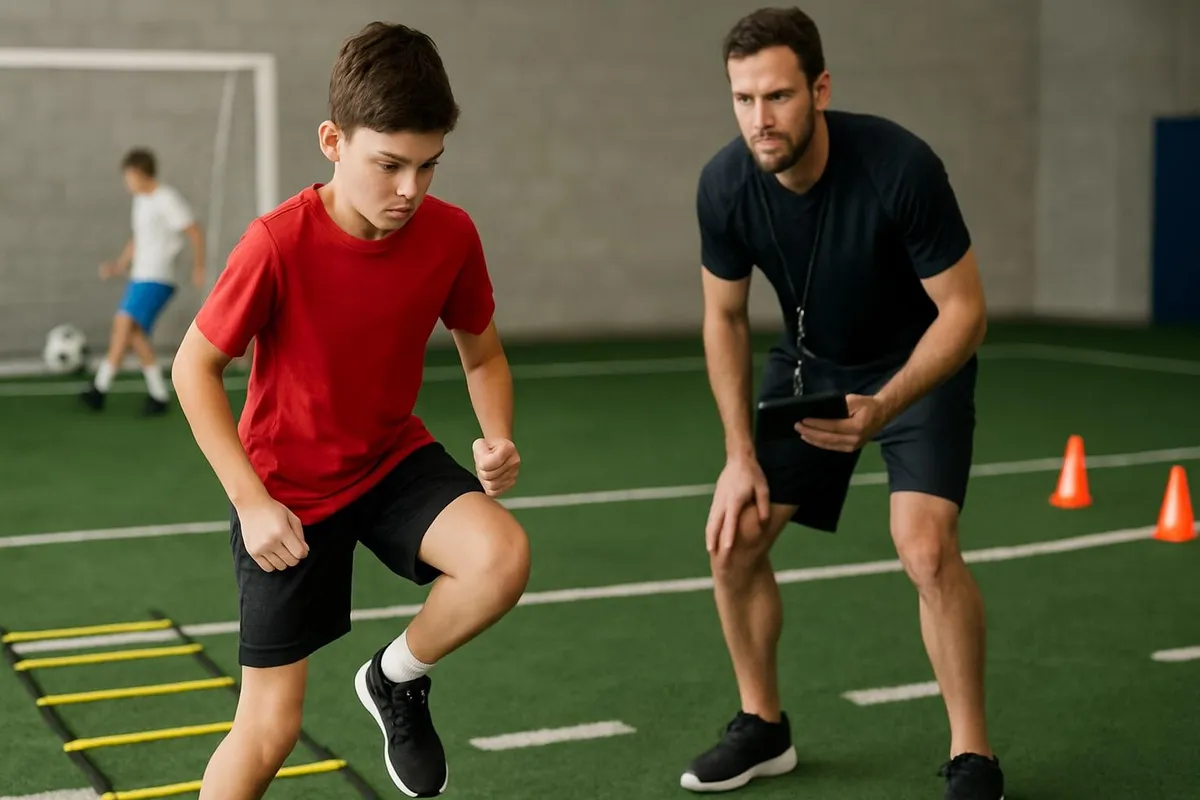
How to Prevent Your Young Athlete From Comparing Themselves to Others
It’s easy for young athletes to compare themselves to the people around them.
Who runs the fastest?
Who jumps the highest?
Who made the team?
Who scored more?
Who is getting more attention from the coach?
With so many opportunities to compete and constantly see what other athletes are doing, comparison can quickly become part of a young athlete’s sporting experience.
But there’s another way to approach development: helping your child focus on becoming a better version of themselves.
Focus on What Your Child Can Control
One of the key ideas discussed on the Inner Athlete Podcast, Ep. 122: Controlling the Controllables: How Youth Athletes Can Thrive On and Off the Field, is the importance of controlling the controllables.
As a parent, you can help your child shift their focus away from comparing themselves to other athletes and towards what they can actually improve.
Instead of focusing on “Am I better than that athlete?”, encourage your child to ask:
“What do I need to improve?”
That might mean speaking with their coach about specific areas they can work on, identifying physical qualities they need to develop, or setting smaller goals that help them move towards a bigger goal.
For example, if your child wants to make a representative team, the first step isn't simply trying to be better than another player.
It’s understanding what they need to improve to give themselves the best chance of getting there.
Progress Doesn't Always Mean Being the Best
Young athletes can sometimes achieve something significant and still feel disappointed because someone else performed better.
They might achieve a personal best but focus on the fact that another athlete was still faster.
This can make it difficult for them to recognise their own progress.
Instead, encourage your child to notice their personal improvements.
Maybe they have become stronger.
Maybe their movement has improved.
Maybe they are more confident.
Maybe they are training with more consistency.
These improvements matter, even if another athlete is still ahead of them.
The goal isn't to constantly compare an athlete's results with someone else's. It's to help them become the most athletic version of themselves.
Help Your Child Set Their Own Goals
Athlete development becomes more meaningful when young athletes understand why they're training.
Rather than simply telling your child what they should improve, start asking questions:
What do you want to achieve?
Why is that important to you?
What do you think you need to work on?
What could you do differently?
How determined are you to achieve that goal?
These conversations can help young athletes take greater ownership of their development.
The role of a coach or parent isn't to want the goal more than the athlete does. It's to provide the support, guidance and accountability that helps them work towards it.
Give Them Space to Learn From Their Own Progress
Young athletes don't always need someone to give them the answer.
Sometimes, they need help recognising the answer for themselves.
For example, if an athlete notices that they feel tired during training, instead of immediately telling them what to change, you could ask:
“What do you think might be contributing to that?”
This encourages them to think about factors such as sleep, nutrition, stress and their overall workload.
Over time, these conversations can help athletes recognise patterns and make better decisions for themselves.
Progress Isn't Always Straightforward
There will be days when your child is highly motivated and days when they aren't.
They may be tired, stressed about school, disappointed after a game or simply having a difficult day.
That doesn't mean they've suddenly lost their motivation or ability.
Good support means understanding where they are that day and adjusting when necessary, while still helping them move forward.
Young athletes need people around them who can push them when they need to be pushed, but also consider everything else happening in their lives.
Help Your Young Athlete Look Forward, Not Sideways
Your child doesn't need to be the strongest, fastest or most talented athlete to make progress.
What matters is that they understand where they are now, where they want to go, and what they can do to move closer to that goal.
As a parent, you can help by shifting the focus away from how your child compares to others and towards their own progress.
That small change can help young athletes recognise their improvements, take greater ownership of their development and stay focused on what they can control.
Want to Help Your Child Develop With Purpose?
At Inner Athlete, we help young athletes understand what they need to improve and provide a structured pathway to help them get there.
Through individualised athletic development, testing and ongoing coaching, the focus is on helping each athlete become a stronger, more capable version of themselves.
Ready to give your child a clear plan for their athletic development?
Book their Quick Start Trial with Inner Athlete.
